
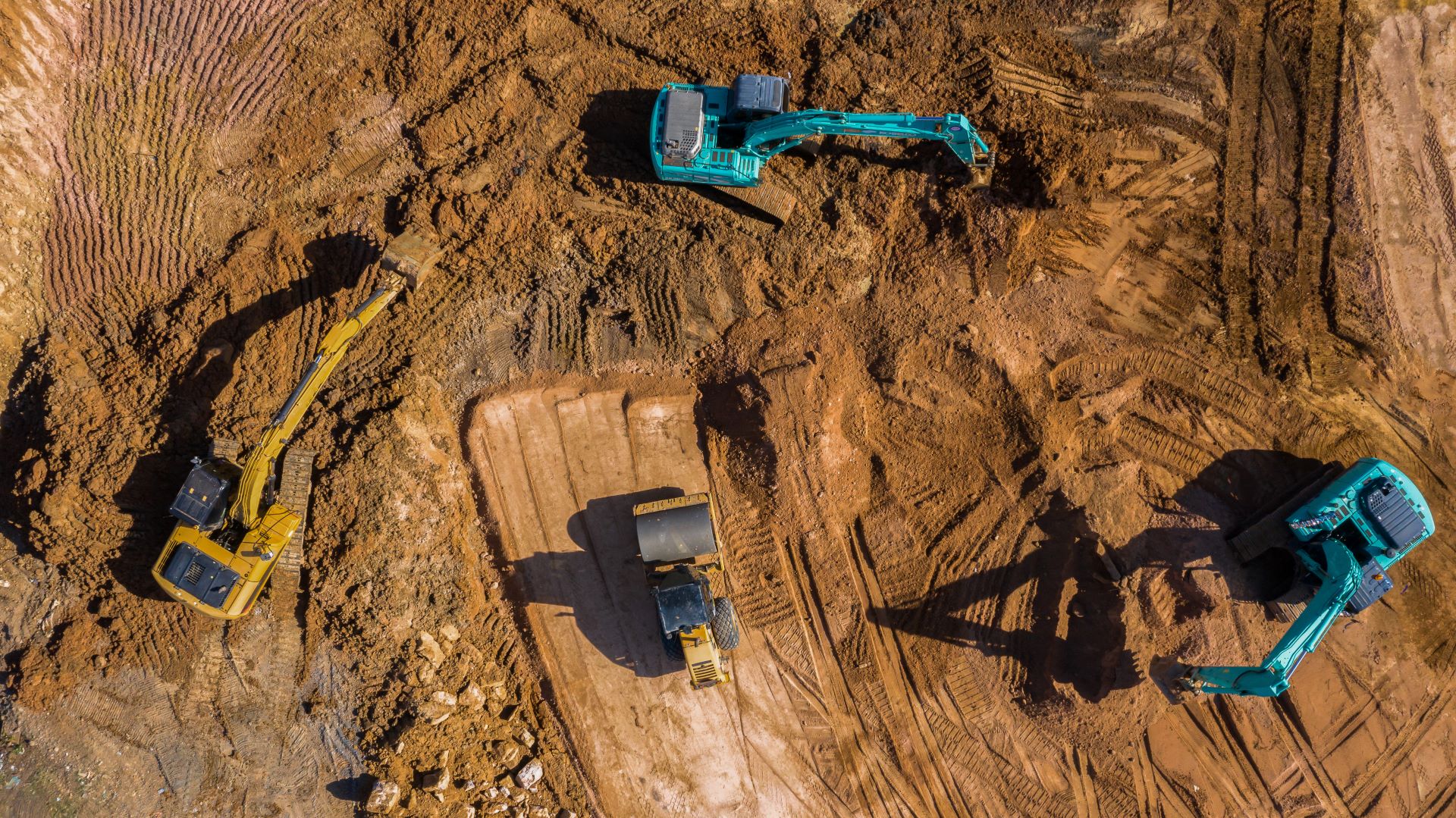
Excavation represents the foundational phase of nearly every significant construction project in Dubai, where errors or oversights can precipitate cascading consequences including structural settlement, utility damage, prolonged delays, and substantial financial exposure. The emirate’s geology—predominantly SP-SM classified loose to medium-dense sands, sabkha zones with high salt content and collapsibility, marine clays near coastal developments, and unpredictable calcarenite lenses—combined with fluctuating groundwater tables (typically 2–5 meters in Jumeirah and shallower near creeks) creates a uniquely challenging environment. Rock excavation, though less frequent in urban settings, occasionally requires controlled hydraulic breaking or, in rare permitted cases, blasting.
Our methodology commences with a robust planning phase. Desktop studies integrate existing geotechnical reports, historical utility mapping, and trial pit or borehole data spaced at 20–50 meter intervals. Three-dimensional cut/fill modeling optimizes material balance, reducing haulage distances and disposal costs. Shoring selection is site-specific: cantilever soldier piles for depths under 4 meters, internally braced sheet piles for deeper excavations, and anchored systems near property boundaries to control deflection.
Dewatering design matches anticipated inflow rates—wellpoint systems for shallow groundwater, deep wells with submersible pumps for higher volumes (up to 1000 m³/day in some locations), and recharge wells to mitigate settlement in adjacent structures. Vibration monitoring is mandatory near sensitive assets, maintaining peak particle velocity below 25 mm/s per BS 7385 guidelines.
Execution follows staged sequences with benching or sloping where temporary shoring is impractical. Spoil is segregated, stockpiled responsibly, and transported to licensed disposal facilities such as Al Warsan under Dubai Municipality oversight. Daily inspections verify shoring deflection (limited to 20 mm), groundwater levels, and overall stability. Compaction testing employs nuclear density gauges at regular intervals (every 300 m² per layer), with moisture-density relationships established per ASTM D698 or D1557.
Reinstatement includes sub-base preparation, base course placement, and surface matching (asphalt or concrete) to existing specifications. All works comply with Dubai Civil Defence excavation permit requirements (Form A/B), Dubai Municipality structural approvals for shoring designs (stamped by approved engineers), RTA traffic impact assessments for verge-adjacent operations, and mandatory 48-hour utility clearance notifications to DEWA, Etisalat, and du.
Environmental and operational challenges are systematically addressed. Loose dune sand sloughing is controlled through temporary benching or polymer soil stabilization. High groundwater inflow is countered with continuous pumping and recharge to prevent adjacent settlement. Heat stress on personnel is managed via shaded rest areas, hydration protocols, and night shifts for large-volume excavations. Dust suppression utilizes water tankers, and noise/vibration limits are strictly enforced per Dubai Municipality standards.
Quantifiable performance includes completion of typical 10,000 m³ basement excavations in 4–6 weeks compared to 8–10 weeks by less disciplined contractors. Backfill routinely achieves 98% compaction on first attempt, reducing long-term settlement risk to negligible levels. Utility strike incidents have remained at zero over the past five years through combined GPR verification and confirmatory potholing.
We accommodate diverse project scales—from small villa plot excavations (500 m³) to master development cut/fill volumes exceeding 500,000 m³. Specialized techniques include top-down basement excavation with permanent propping, vacuum excavation for sensitive utility proximity, and hydro-vac potholing to confirm buried services.
In conclusion, excavation in Dubai is a high-liability activity where engineering rigor, regulatory compliance, and proactive risk management determine project success. Our consistent delivery of safe, precise, and timely earthworks—supported by in-house geotechnical review, calibrated equipment, real-time monitoring dashboards, and accelerated NOC processing—provides clients with certainty and measurable cost/time advantages in one of the world’s most demanding construction markets.


