
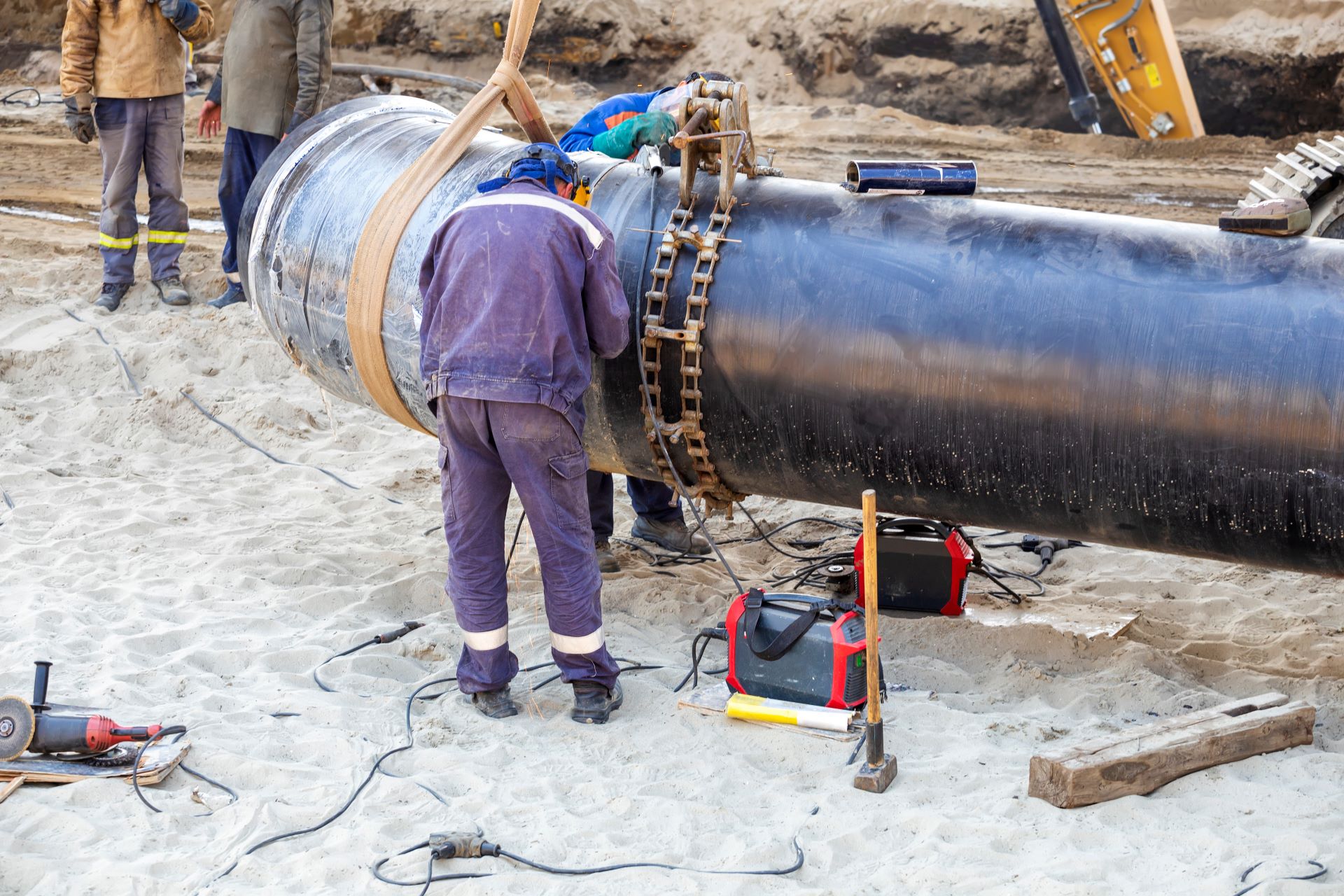
High-pressure piping systems (≥20 bar, frequently 40–100+ bar) in Dubai’s industrial, oil/gas, utility, and process facilities represent unforgiving infrastructure where leaks rapidly escalate into ruptures, jet fires, toxic releases, flooding, or explosion hazards. Failure mechanisms include internal corrosion from CO₂/H₂S in gas lines, external pitting from saline coastal air, fatigue cracking from pressure/temperature cycling, original weld imperfections, hydrogen embrittlement in certain alloys, and mechanical damage from third-party activity or ground settlement.
Our methodology adheres to ASME B31.3 (process piping), B31.8 (gas transmission), API 570 (in-service inspection and repair), and local DEWA/DCD mandates. Risk assessment precedes all work, including permit-to-work, hot-work permits where applicable, and energy control via lockout/tagout (LOTO) and blinding/spading for zero-energy guarantee.
Detection employs high-sensitivity ultrasonic leak detectors for gas, acoustic emission monitoring for growing defects, pressure decay tests for micro-leaks, and infrared imaging for steam/water. Isolation uses double block and bleed valves or physical blinding to isolate the repair zone.
Repair techniques include full section replacement (cold cutting, bevel preparation, qualified welding of pup pieces with pre-heat/post-weld heat treatment per material group), sleeve reinforcement (encompassing clamps for temporary or permanent repair), composite wrap systems for non-critical lines, and hot-tap plus bypass installations where shutdown is impossible. Welding follows qualified procedures (SMAW/GTAW), with 100% volumetric NDT (radiography or automated ultrasonic) on butt welds and surface NDT (MPI/DPI) on attachments.
Testing comprises hydrostatic pressure at 1.5–2× design pressure (4–24 hour hold per code), pneumatic testing where hydrostatic methods pose unacceptable risk, leak detection fluid or helium sniff testing for gas systems, and purging/inerting with nitrogen to maintain oxygen below 5%. NDT includes radiography crawlers for welds, ultrasonic thickness surveys, and magnetic particle/dye penetrant for surface defects.
UAE-specific requirements are rigorously addressed. DEWA high-pressure NOC and method statement submission are mandatory for gas lines, DCD approval is required for fire/explosion risk, and night works are scheduled in populated industrial zones. Heat effects on welding are controlled via shaded environments, welders rotated, and hydration protocols enforced.
Quantifiable performance includes average repair of 4-inch 50-bar lines completed within 24–48 hours, 100% first-time test success, and avoidance of AED 1–10 million+ in shutdown losses, fines, and rectification costs seen in delayed or substandard repairs.
Variations encompass live hot-tap repairs with bypass, composite reinforcement without shutdown, large-diameter mains (>24 inches), cryogenic service lines where applicable, and fitness-for-service assessments per API 579 for continued operation.
In conclusion, high-pressure pipe leak rectification in Dubai is a life-safety-critical discipline requiring absolute precision in isolation, repair, NDT, pressure testing, and regulatory compliance. Our traceable welding procedures, 100% NDT coverage, rapid DCD/DEWA approvals, and emergency protocols deliver uninterrupted operations and asset protection in one of the region’s most demanding industrial environments.


