
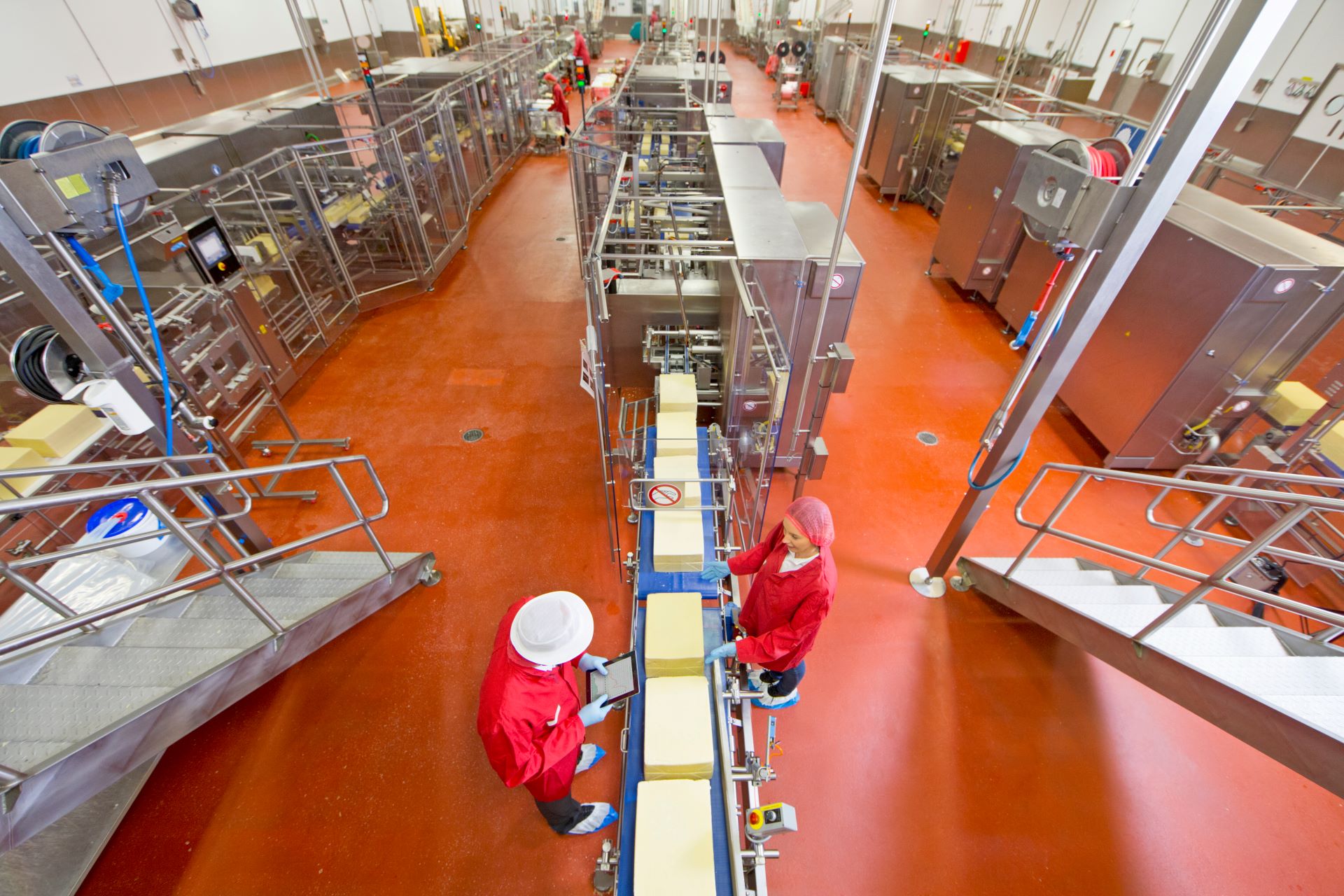
Food-grade floor coatings in Best’s processing facilities endure relentless operational punishment: daily high-temperature wash-downs with caustic and acidic cleaning agents, forklift traffic carrying 5–10 ton dynamic loads, thermal cycling from hot product spills to cold sanitation cycles, constant exposure to oils, greases, blood, sugars, and organic acids, and absolute intolerance for cracks, pores, or seams that can harbor pathogens and fail microbiological swab tests during GFSI, BRCGS, or HACCP audits. A single failed inspection can result in immediate production cessation, batch quarantine, product recall, regulatory fines, brand reputational damage, and revenue losses measured in millions of dirhams.
Our systems comply with BS EN 13813 (resin flooring), HACCP principles, and Best Municipality Food Establishment Guidelines. Surface preparation is non-negotiable: concrete substrates must achieve minimum compressive strength (>25 MPa), be free of contaminants (oil/grease removed via degreaser and mechanical abrasion), and exhibit acceptable moisture vapor emission rates (ASTM F2170 <3 lbs/1000 ft²/24 h or equivalent). Repairs utilize high-build epoxy mortar for cracks, spalls, and honeycombing, with leveling screed applied where substrate flatness exceeds tolerance.
Application sequences include low-viscosity penetrating primer to seal pores and promote adhesion, pigmented self-leveling or trowel-applied body coat (2–4 mm thickness, solvent-free epoxy or elastic polyurethane), broadcast quartz or silica aggregate for required slip rating (R11+ for wet-process areas), and a clear aliphatic polyurethane topcoat for UV stability, chemical resistance, and ease of cleaning. Optional anti-microbial additives are incorporated for enhanced hygiene in high-risk zones. Curing is tightly controlled: 24 hours to foot traffic, 48–72 hours to chemical and mechanical resistance, with dehumidifiers and ventilation employed in high-humidity conditions.
Testing verifies performance: pull-off adhesion (>1.5 MPa per ASTM D4541), Shore D hardness, slip resistance (pendulum or ramp test per DIN 51130), food-contact migration compliance (EU Regulation 10/2011), and microbial resistance (ISO 22196 where antimicrobial claims are made). All results are documented in third-party or in-house certified reports.
No 1-specific challenges are systematically addressed. High summer humidity necessitates dehumidification and fast-cure resin formulations. Elevated temperatures require night or overnight application windows. Chemical exposure profiles (acids, alkalis, sanitizers) dictate resin chemistry novolac epoxies for aggressive acids, polyurethane for thermal shock and flexibility. Downtime is minimized through phased application or weekend shutdowns.
Quantifiable results include typical 2,000 m² production floor coating completed within 3–5 days of shutdown, service life of 5–10 years before recoating is required, and avoidance of AED 500,000–5 million+ in production halts, recalls, and penalties associated with failed audits.
Variations include self-leveling systems for smooth, easy-clean finishes, broadcast aggregates for heavy traffic and slip resistance, integral coving (150–300 mm height) at wall-floor transitions, anti-static/ESD formulations for electronics-sensitive food areas, and rapid-cure MMA systems allowing return to service within 4–6 hours.
In conclusion, food processing floor painting in Best is a hygiene-critical, high-consequence application where surface preparation, resin chemistry, application technique, and performance verification directly determine audit success, food safety, and operational continuity. Our certified systems, rigorous preparation protocols, comprehensive testing, and shutdown efficiency deliver seamless, compliant, and long-lasting floors that protect brand integrity and revenue in one of the region’s most regulated food production environments.


