
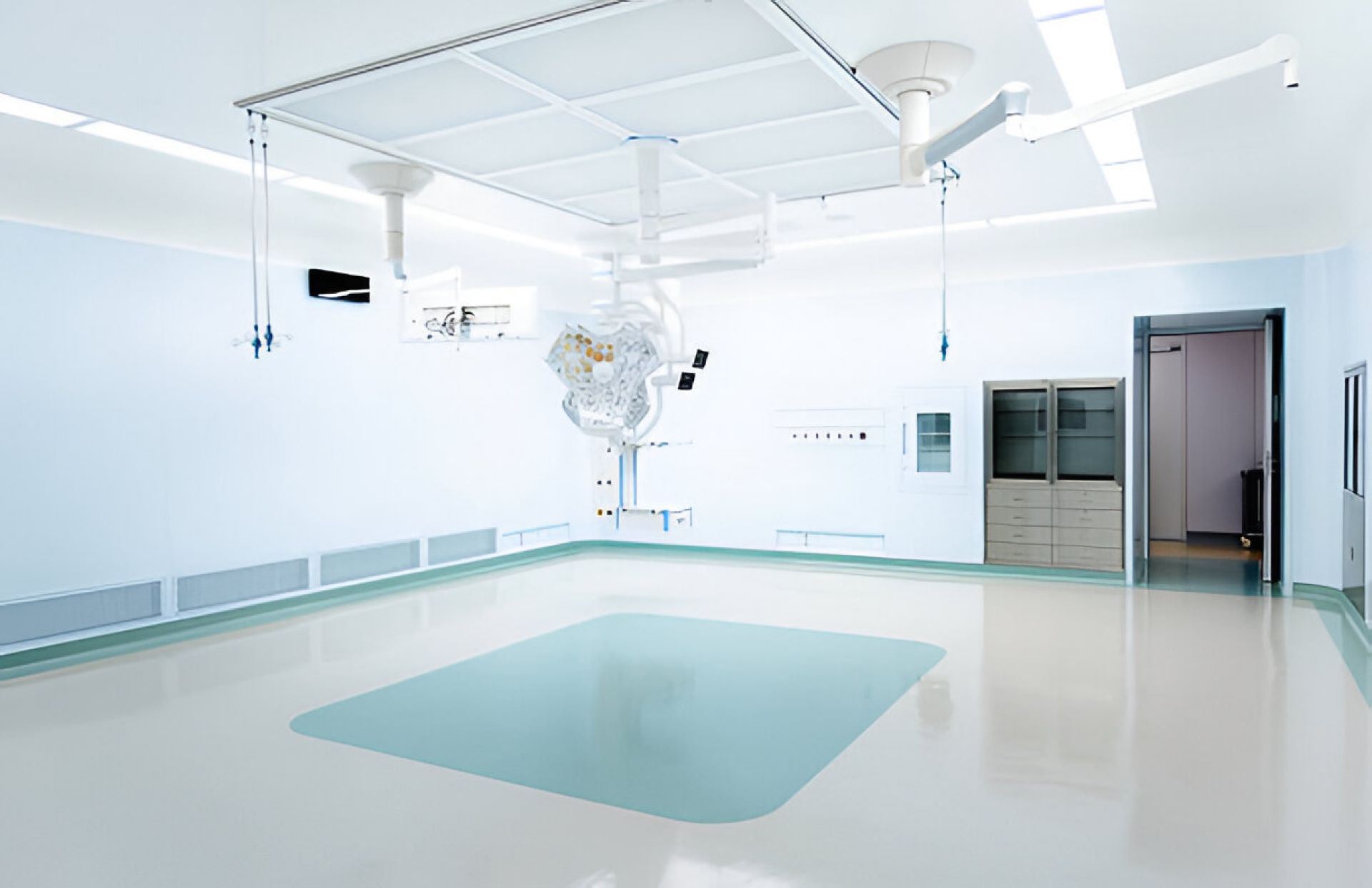
Cleanroom flooring works as a key piece of the contamination barrier, teaming up with walls, ceilings, air systems, and routines to hold airborne particles at controlled levels. Unlike regular factory floors, these are made fully waterproof, low‑outgassing, and simple to sterilize, avoiding chemical soak‑in, germ buildup, or dust shedding that could harm the space.
Common setups include poured resin coatings like epoxy or polyurethane, which spread liquid then harden into gapless layers with strong wear and chemical protection for drug and chip making areas. Vinyl options involve site‑fused sheets with curved edges for smooth lab and clinic finishes. Some use raised panels over air plenums for service access while keeping tops wipeable.
Key to cleanroom floors is smooth edge handling—floors often sweep up walls to erase dust corners and let cleaners reach everywhere. Holes for pipes, posts, and gear get tight seals against leaks or hidden dirt. Texture stays light for grip without trapping grime.
For electronics and drug sites, floors often include charge‑dissipating layers tied to ground systems to stop sparks from damaging parts or igniting vapors. They hold up to repeated alcohol, peroxide, or bleach wipes without softening or fading.
Low chemical off‑gassing keeps the floor from adding to air pollutants that hurt yields or tests. Right choice, prep, and care give years of solid, unbroken service meeting hygiene rules.


