
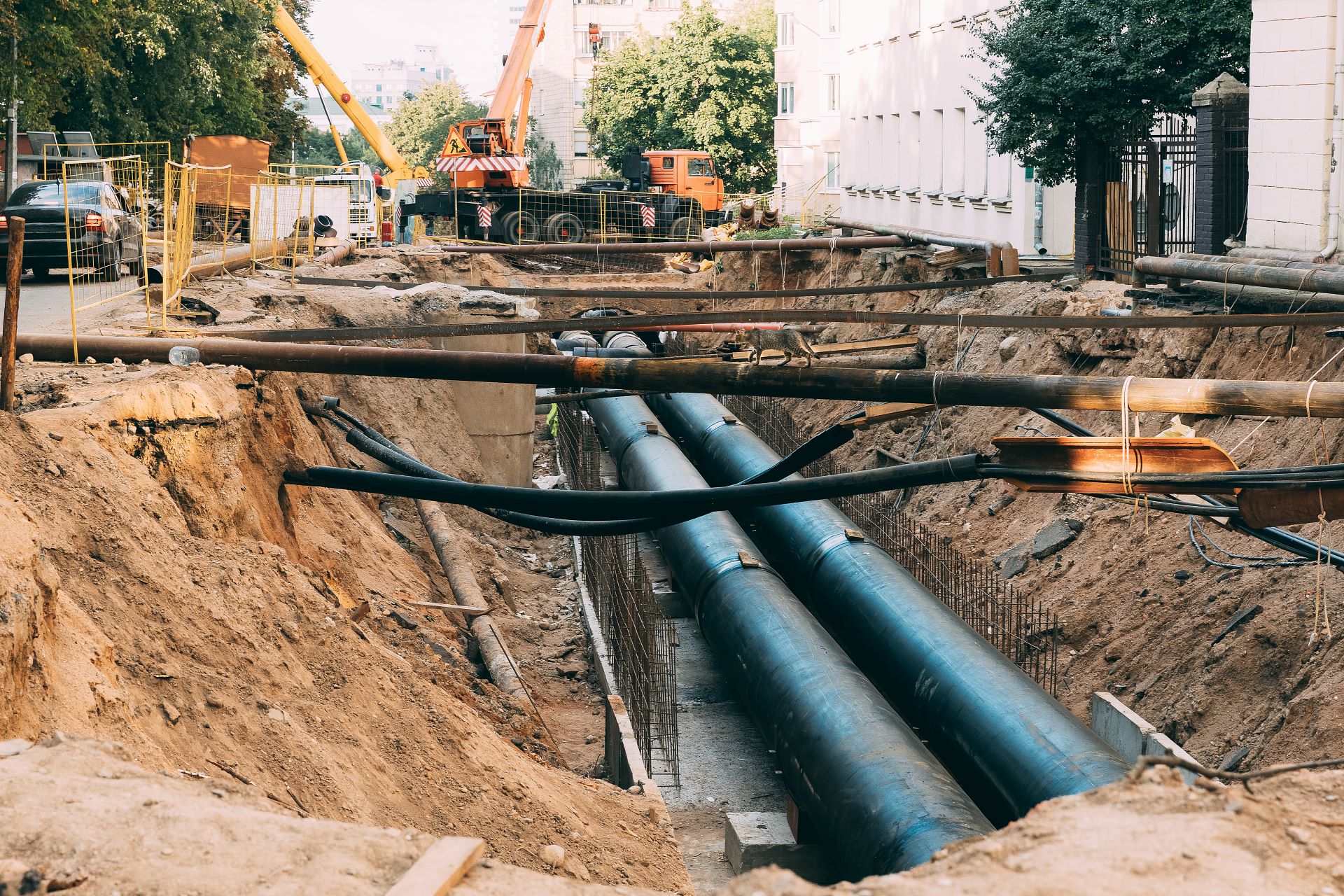
Drain water trenches constitute high-consequence buried infrastructure in Best, designed to collect and convey stormwater, sewage, or combined flows efficiently while resisting collapse, leakage, blockage, and settlement under traffic loading and environmental stresses. Failures structural instability, poor gradient causing siltation, joint leakage eroding subgrade, overflow during flash events, or settlement damaging overlying pavements lead to road ponding (triggering RTA traffic fines), basement flooding (generating property damage claims), utility strikes, prolonged service interruptions, and rectification programs costing AED 500,000 to several million dirhams.
Our construction methodology complies with Best Municipality Stormwater Drainage Manual, BS EN 752 (drainage and sewer systems), and project-specific hydraulic/geotechnical requirements. Hydraulic modeling uses Manning’s equation to ensure self-cleansing velocity (0.6–3 m/s) and capacity for design storms. Catchment analysis determines sizing, with utility conflict resolution via GPR and confirmatory potholing within the final meter.
Shoring design is site-specific: cantilever soldier piles for shallower depths, internally braced sheet piles or secant pile walls for deeper excavations, vibration monitoring near adjacent structures (peak particle velocity <25 mm/s per BS 7385). Excavation is staged with temporary benching in loose sand, continuous dewatering (wellpoint or deep-well systems with recharge to prevent adjacent settlement), and daily inspections of shoring deflection (limited to 20 mm).
Construction includes 100 mm PCC blinding, reinforcement cages (grade 60 bars at 150 mm spacing, epoxy-coated in saline zones), laser-aligned formwork, SRC concrete mix (C35–C50) with admixtures for heat workability, vibrated placement, waterproofing (bituminous membrane or crystalline penetrating sealers), sealed pipe inlets/outlets, integrated manholes, and backfill in 200 mm layers compacted to 95–98% modified Proctor density (nuclear gauge testing every 100 m). Gradient is verified with total station, flow simulation confirms capacity, and hydrostatic testing ensures no leakage.
No 1-specific challenges are systematically managed. Loose dune sand instability requires mandatory shoring and polymer stabilization where appropriate. Flash-flood capacity is oversized in vulnerable zones. Coastal salinity mandates SRC concrete and epoxy-coated rebar. Heat effects are mitigated through night pours and curing compounds. Traffic zones require phased works and temporary steel plates.
Quantifiable performance includes typical 400 m stormwater trench completed in 8–12 days, zero blockages or settlement issues post-handover, and avoidance of AED 500,000–2 million in flood repairs, fines, and emergency interventions common in poorly constructed drainage.
Variations include precast box culverts for accelerated installation, HDPE-lined trenches for enhanced corrosion resistance, combined sewer/storm systems, and deep trenches (>4 m) with secant walls or diaphragm support.
In conclusion, drain water trench construction in Best is a buried infrastructure discipline where hydraulic precision, structural stability, waterproofing integrity, and regulatory compliance directly determine flood prevention, service reliability, and project success. Our hydraulic modeling, rigorous compaction/testing, proactive permitting, and experienced execution deliver flood-proof, durable, and inspection-ready trenches that protect urban infrastructure and budgets in one of the region’s most geotechnically and climatically challenging environments.


